The US Coast Guard mandates specific safety equipment for all recreational boats to ensure maritime safety and legal compliance. Understanding these requirements prevents costly fines and, more importantly, protects lives on the water. This comprehensive guide covers all mandatory safety gear required by federal law in 2026.
US Coast Guard Safety Equipment Requirements Overview
Federal boating safety regulations require specific equipment based on your vessel’s length, type, and operating conditions. The US Coast Guard safety equipment requirements are divided into several categories including personal flotation devices, visual distress signals, fire extinguishers, and sound-producing devices. These regulations apply to all recreational vessels operating in US waters, including inland lakes, rivers, and coastal areas.
Compliance with these boat safety equipment requirements is not optional – violations can result in fines up to $5,000 per missing item in 2026. Coast Guard boarding officers conduct regular safety inspections, and proper equipment can mean the difference between a minor inconvenience and a maritime emergency. The requirements scale with vessel size, with larger boats requiring additional safety gear.
Personal Flotation Devices (PFDs): Essential Life-Saving Equipment
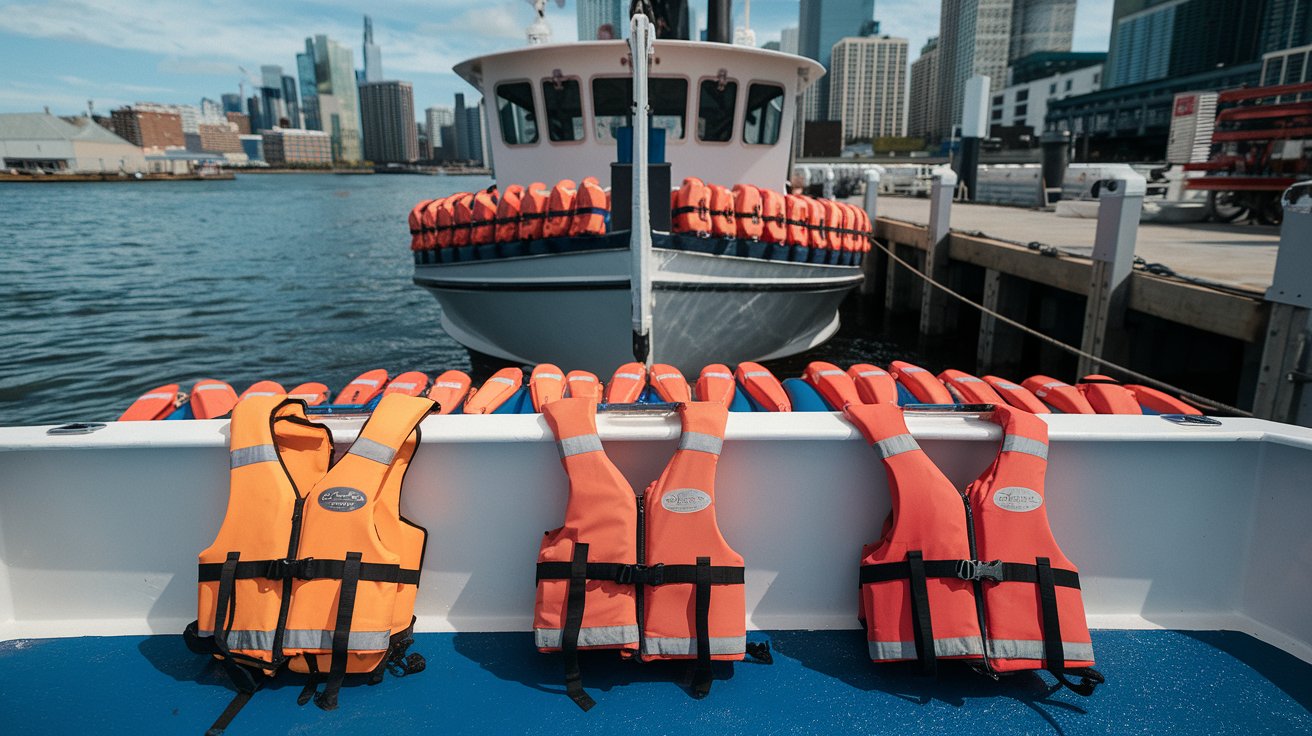
Every recreational boat must carry Coast Guard approved PFDs equal to the number of persons on board, plus additional requirements for specific vessel types. Type I, II, III, or V PFDs are acceptable for most recreational boats, with each type offering different buoyancy levels and intended uses. Children under 13 years must wear properly fitted PFDs at all times while the vessel is underway in most states.
Personal watercraft operators and passengers must wear Coast Guard approved life jackets at all times while the vessel is in operation. Additionally, boats 16 feet and longer must carry one Type IV throwable flotation device, such as a ring buoy or cushion. PFDs must be in serviceable condition, readily accessible, and appropriate for the intended wearer’s size and weight.
PFD Types and Selection Guidelines
Type I PFDs provide the highest buoyancy (22 pounds minimum) and are designed for offshore waters where rescue may be delayed. Type II devices offer 15.5 pounds of buoyancy and work well for nearshore boating. Type III PFDs are most popular for recreational boating, providing 15.5 pounds of buoyancy with greater comfort and mobility. Type V devices are special-use PFDs that must be worn to meet requirements.
Throwable Flotation Device Requirements
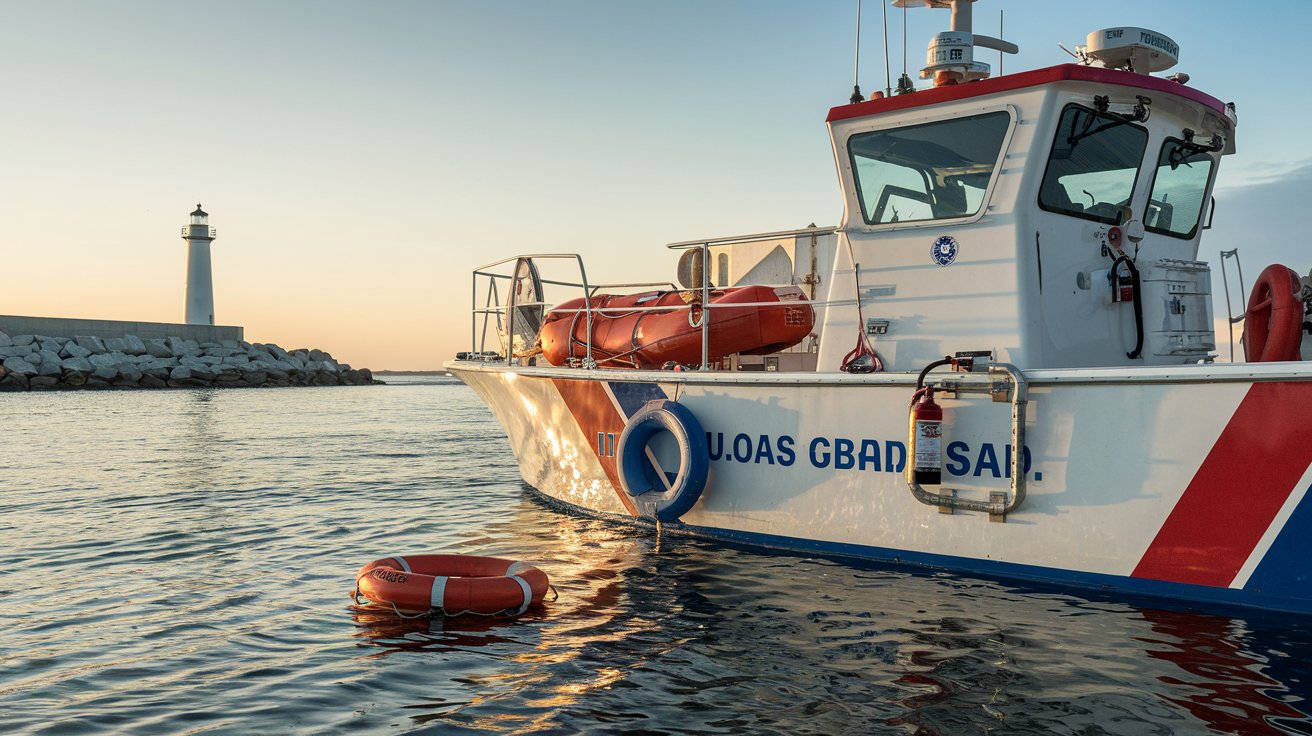
Boats 16 feet and longer must carry at least one Type IV throwable device that is immediately accessible to the operator. Ring buoys, boat cushions, or horseshoe buoys qualify as throwable devices. These items must be in good condition, not used as seating or fenders, and within easy reach during emergency situations.
Visual Distress Signals: Critical Emergency Communication
Recreational boats operating in coastal waters, the Great Lakes, or waters connected to them must carry Coast Guard approved visual distress signals. The specific requirements depend on boat size and operating area, with different rules for day versus night operation. Boats less than 16 feet need signals only when operating between sunset and sunrise, while larger vessels require signals at all times.
Three categories of visual distress signals meet Coast Guard requirements: pyrotechnic devices (flares), non-pyrotechnic devices (flags, mirrors), and combination packages. Pyrotechnic signals have expiration dates and must be replaced every 42 months to remain compliant. Non-pyrotechnic devices don’t expire but must be in serviceable condition and readily accessible.
Day Signal Requirements
During daylight hours, acceptable visual distress signals include orange distress flags, signal mirrors, or pyrotechnic devices marked for day use. The orange distress flag must be at least 3 feet by 3 feet with a black square and ball design on an orange background. Signal mirrors must be Coast Guard approved and capable of signaling aircraft or surface vessels.
Night Signal Requirements
Night signaling requires electric distress lights or pyrotechnic devices suitable for night use. Acceptable options include red aerial flares, red hand-held flares, or electric distress lights. Pyrotechnic devices must be Coast Guard approved and within their expiration date to meet legal requirements.
Fire Extinguisher Requirements by Vessel Size
Most recreational boats with enclosed compartments, permanent fuel tanks, or inboard engines must carry Coast Guard approved fire extinguishers. The number and size of extinguishers required depends on boat length, with specific classifications for different vessel sizes. Class B fire extinguishers are required for boats, designed to combat flammable liquid fires common in marine environments.
Boats under 26 feet typically require one B-I fire extinguisher, while vessels 26-40 feet need either two B-I or one B-II extinguisher. Fire extinguishers must be readily accessible and properly mounted to prevent damage during vessel operation. Regular inspection and maintenance ensure extinguishers will function properly during emergencies.
Fire Extinguisher Classifications and Placement
Class B-I extinguishers contain 2 pounds of dry chemical or 1.25 gallons of foam, suitable for smaller boats. Class B-II extinguishers contain 10 pounds of dry chemical or 2.5 gallons of foam for larger vessels. Extinguishers must be mounted in readily accessible locations, protected from weather and physical damage.
Maintenance and Inspection Requirements
Fire extinguishers require regular inspection to ensure proper pressure and condition. Check pressure gauges monthly and have units professionally serviced annually. Expired or discharged extinguishers don’t meet Coast Guard requirements and must be recharged or replaced immediately.
Sound Signaling Devices: Navigation Safety Equipment
All recreational boats must carry appropriate sound-producing devices for navigation safety and collision avoidance. Requirements vary by boat length, with smaller vessels needing basic signaling capability while larger boats require specific horn and whistle combinations. Sound signals communicate intentions to other vessels and alert others during restricted visibility conditions.
Boats less than 39.4 feet need some means of making an efficient sound signal, such as an air horn, whistle, or electronic horn. Vessels 39.4 feet and larger require both a power horn and a whistle or hand-operated horn for backup. All sound devices must be capable of producing the required signal patterns specified in navigation rules.
Navigation Equipment and Lighting Requirements
Proper navigation equipment ensures safe operation during various weather and visibility conditions. All boats operating between sunset and sunrise must display appropriate navigation lights according to vessel size and type. Additionally, boats operating in foggy conditions or restricted visibility areas need radar reflectors or other means of detection.
Navigation lights include red and green sidelights, white stern lights, and all-around white lights depending on vessel configuration. LED navigation lights have become standard in 2026 due to their energy efficiency and reliability. Backup lighting systems are recommended for boats operating in challenging conditions or extended trips.
Required Navigation Light Configurations
Boats under 39.4 feet can use combination red/green bow lights with white stern lights or a single all-around white light if under 23 feet. Larger vessels require separate red and green sidelights, white stern lights, and masthead lights. All lights must be Coast Guard approved and properly positioned according to regulations.
Radar Reflectors and Electronic Navigation
While not always mandatory, radar reflectors significantly improve vessel visibility to other boats and commercial traffic. Electronic navigation equipment like GPS, chart plotters, and VHF radios enhance safety but aren’t required by federal law. Many states recommend or require VHF radios for boats operating in certain areas.
Additional Safety Equipment by Boat Type and Size
Specific boat types and sizes require additional safety equipment beyond basic requirements. Personal watercraft need specific equipment like engine cutoff switches and whistle lanyards. Larger boats may need bilge pumps, navigation tools, and emergency position indicating radio beacons (EPIRBs) for offshore operation.
Commercial vessels and charter boats operating with passengers have enhanced safety equipment requirements including life rafts, emergency medical kits, and additional signaling devices. State regulations may impose additional requirements beyond federal minimums, particularly for specific waterways or operating conditions.
State-Specific Requirements and Variations
While federal regulations provide baseline safety equipment requirements, individual states may impose additional mandates for boats operating in their waters. Some states require additional safety equipment like throw bags, first aid kits, or specific types of signaling devices. Popular boating states like Florida, California, and Texas have enhanced requirements for certain waterways.
State requirements often address local conditions such as cold water mandating exposure suits, or shallow water requiring specific navigation equipment. Boaters must comply with both federal and state regulations when operating in state waters, making it essential to research requirements for each jurisdiction where you plan to operate.
Related video about what safety equipment is required on a boat
This video complements the article information with a practical visual demonstration.
Frequently Asked Questions
What safety equipment is legally required on all boats in the United States?
All boats must carry Coast Guard approved personal flotation devices (one per person), appropriate fire extinguishers for boats with enclosed compartments, sound-producing devices, and visual distress signals for boats operating in coastal waters. The specific requirements scale with boat size and operating area.
Do I need flares on my boat and how many are required?
Boats operating in coastal waters, Great Lakes, or connected waters need visual distress signals. The minimum requirement is three day/night combination signals or a mix of day and night signals totaling three devices. Pyrotechnic signals like flares expire every 42 months and must be replaced.
What type of fire extinguisher is required on recreational boats?
Class B fire extinguishers are required for boats with enclosed compartments, permanent fuel tanks, or inboard engines. Boats under 26 feet need one B-I extinguisher, while 26-40 foot boats require either two B-I or one B-II extinguisher. Extinguishers must be Coast Guard approved and readily accessible.
Are there different safety equipment requirements for personal watercraft?
Personal watercraft have specific requirements including Coast Guard approved PFDs that must be worn at all times while operating, sound-producing devices like whistles, and engine cutoff switches with lanyards. Visual distress signals are required in coastal waters, same as other boats.
How often should I inspect and replace boat safety equipment?
PFDs should be inspected before each use for rips, tears, or missing components. Fire extinguishers need monthly pressure checks and annual professional servicing. Pyrotechnic signals expire every 42 months and must be replaced. Navigation lights and electronic equipment should be tested regularly before each trip.
What happens if I’m caught without required safety equipment during a Coast Guard inspection?
Missing required safety equipment can result in fines up to $5,000 per violation in 2026. Coast Guard officers may issue citations, terminate your voyage, or require you to return to port immediately. Repeat violations can result in increased penalties and potential criminal charges for negligent operation.
| Safety Equipment Category | Requirements by Boat Size | Key Compliance Notes |
|---|---|---|
| Personal Flotation Devices | One per person + Type IV throwable for boats 16ft+ | Must be Coast Guard approved and readily accessible |
| Fire Extinguishers | One B-I for boats under 26ft, two B-I or one B-II for 26-40ft | Required for boats with enclosed compartments or fuel tanks |
| Visual Distress Signals | Three signals minimum for coastal waters operation | Pyrotechnic signals expire every 42 months |
| Sound Signals | Horn/whistle for boats under 39.4ft, power horn + backup for larger | Must produce efficient sound signal for navigation safety |