Water depth markers are essential safety indicators found on pools, lakes, and waterways across the United States. Understanding how to read water depth markers correctly can prevent accidents and ensure safe swimming experiences. These numerical markings typically display depth measurements in feet and inches, providing crucial information for swimmers, divers, and watercraft operators to make informed safety decisions.
Understanding Basic Water Depth Marker Systems
Water depth markers in the United States follow standardized measurement systems that display depth readings in feet and inches. Most residential pools use painted or tiled numbers along the pool walls, while commercial facilities often employ more sophisticated gauge boards. The numbers typically range from shallow end measurements of 2-4 feet to deep end readings of 8-12 feet in standard swimming pools. Understanding these basic depth indicators is fundamental for safe water activities and proper pool maintenance.
Modern depth marking systems have evolved significantly in 2026, incorporating enhanced visibility features and improved durability. Many facilities now use contrasting colors and larger font sizes to ensure clear depth visibility from various angles and lighting conditions. The standardization across different pool types helps swimmers quickly identify safe areas for their swimming abilities, making water depth markers an indispensable safety feature.
Pool Depth Markers and Measurement Standards
Pool depth markers must comply with specific safety regulations established by the International Code Council and local health departments. These pool safety standards require depth markings at minimum intervals of 25 feet along pool perimeters, with additional markers at depth transition points. The measurements displayed represent the water depth from the surface to the pool bottom at that specific location, ensuring swimmers can accurately assess diving safety.
Water Depth Gauge Board Components
Professional water depth gauge boards feature multiple components including numerical displays, measurement scales, and sometimes digital readouts. These gauge board systems provide precise depth measurements for larger water bodies like marinas and commercial pools. The boards typically include both metric and imperial measurements, catering to diverse user preferences and international safety standards prevalent in 2026.
Reading Water Depth Markers in Different Environments
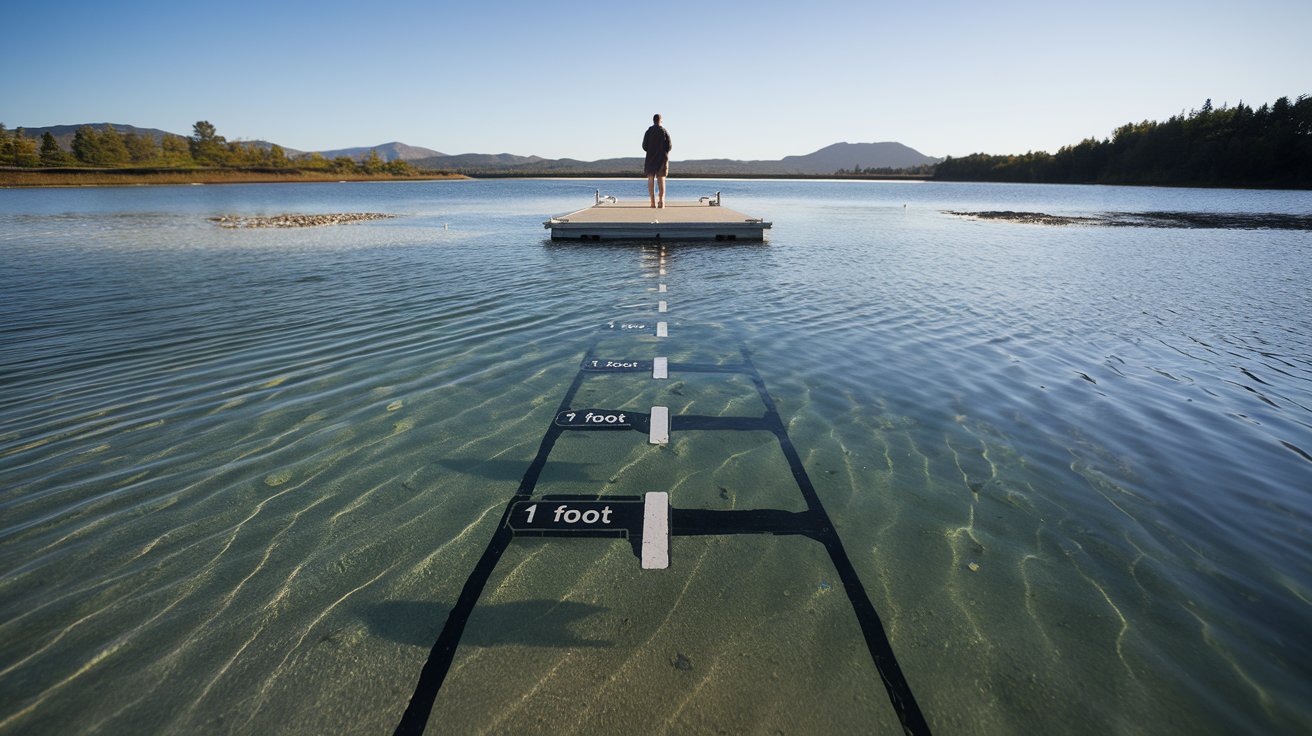
Different aquatic environments require specific approaches to reading depth measurements accurately. Swimming pools typically feature the most straightforward marking systems, with clear numerical indicators painted or embedded in pool decking. Natural water bodies like lakes and rivers may use floating markers or shore-mounted gauge boards that account for seasonal water level fluctuations. Marina environments often employ sophisticated electronic depth reading systems that provide real-time measurements for boat navigation.
Florida’s unique coastal environment presents additional challenges for water depth marker interpretation. Tidal variations, seasonal changes, and storm impacts can affect actual water levels versus marked depths. Many Florida waterways now incorporate tide-adjusted markers that account for these natural fluctuations, providing more accurate depth readings throughout different tidal cycles in 2026.
Pool Depth Assessment Techniques
Accurate pool depth assessment requires understanding marker placement and measurement protocols. Professional pool installers position depth markers at precise locations to reflect actual water depth at normal operating levels. When reading these markers, always consider that water displacement from swimmers can temporarily affect depth measurements, particularly in smaller residential pools.
Natural Waterway Depth Reading Methods
Natural waterways present unique challenges for depth measurement interpretation. River and lake markers often indicate seasonal average depths rather than current conditions. Weather patterns, drought conditions, and flood events can significantly impact actual water levels versus marked depths. Always consult current water condition reports when relying on depth markers in natural environments.
Safety Considerations When Reading Depth Markers
Safety remains the primary consideration when interpreting water depth measurements for diving and swimming activities. The American Red Cross recommends minimum depth requirements of 9 feet for safe diving from pool edges and 12 feet for diving board use. Always verify actual water conditions before diving, as depth markers may not account for debris, equipment, or structural changes that could affect safe diving clearances.
Recent updates to swimming safety protocols in 2026 emphasize the importance of depth marker verification before engaging in water activities. Pool maintenance can affect actual water levels, and depth markers should be cross-referenced with current pool conditions. Additionally, swimmer ability levels should always be considered alongside depth readings to ensure appropriate activity selection.
Technology Integration in Modern Depth Measurement
Advanced technology integration has revolutionized water depth measurement systems across the United States in 2026. Digital displays now provide real-time depth readings that automatically adjust for water level changes, temperature effects, and seasonal variations. Smart pool systems can integrate depth sensors with mobile applications, allowing property owners to monitor water levels and depth accuracy remotely.
Innovative depth measurement technologies include ultrasonic sensors, pressure-based systems, and optical measurement devices. These systems provide enhanced accuracy compared to traditional painted markers, particularly in commercial and public pool environments. The integration of wireless connectivity allows for automatic safety alerts when depth conditions fall outside safe parameters.
Digital Depth Monitoring Systems
Digital monitoring systems offer real-time depth measurement capabilities that surpass traditional marker accuracy. These systems can detect minute changes in water levels and provide instant updates to facility managers and swimmers. Integration with facility management software allows for comprehensive depth tracking and maintenance scheduling based on accurate measurement data.
Smart Pool Integration Features
Smart pool systems now incorporate automated depth verification as standard features in premium installations. These systems can detect when water levels affect marked depths and provide corrected readings through connected devices. The technology helps maintain consistent safety standards while reducing manual depth verification requirements.
Maintenance and Accuracy of Depth Markers
Regular maintenance ensures depth marker accuracy throughout the operating season and beyond. Pool operators should verify marker readings quarterly using professional measurement tools to confirm accuracy. Paint fading, tile damage, or structural settling can affect marker visibility and accuracy, requiring prompt attention to maintain safety standards.
Professional depth marker maintenance includes cleaning procedures to maintain visibility, accuracy verification using calibrated measurement tools, and prompt repair of damaged markers. The National Swimming Pool Foundation recommends annual professional inspection of all depth marking systems to ensure compliance with current safety standards and accurate depth representation.
Regional Variations in Depth Marking Standards
Different regions across the United States maintain specific requirements for water depth marking standards. Coastal areas like Florida often incorporate additional requirements for tidal considerations and hurricane-resistant marker installations. Mountain regions may require cold-weather resistant materials and freeze-thaw cycle considerations for year-round marker durability.
State-specific regulations influence depth marker implementation across various jurisdictions. California’s stringent pool safety laws require enhanced visibility standards and additional marker placements compared to other states. Understanding local requirements ensures compliance and optimal safety performance for depth marking systems in 2026.
Florida-Specific Depth Marking Requirements
Florida’s unique environmental conditions require specialized depth marking approaches that account for hurricane resistance and saltwater exposure. The state mandates corrosion-resistant materials and enhanced visibility standards for coastal pool installations. These requirements ensure marker longevity and accuracy despite challenging environmental conditions.
Northern Climate Considerations
Northern climates present specific challenges for depth marker durability including freeze-thaw cycles and seasonal pool closures. Markers must withstand temperature extremes while maintaining accuracy and visibility. Special installation techniques and materials help ensure year-round performance in harsh climate conditions.
Testing and Verification Methods for Pool Depth
Accurate pool depth verification requires systematic testing methods that confirm marker accuracy and water level consistency. Professional pool technicians use weighted measuring tapes, electronic depth finders, and laser measurement systems to verify marked depths against actual conditions. These verification procedures should be conducted during initial installation and annually thereafter to maintain accuracy standards.
Water level fluctuations can affect the relationship between marked depths and actual measurements. Pool operators should establish baseline measurements at normal operating levels and document any variations that occur due to seasonal changes, equipment modifications, or maintenance activities. This documentation helps maintain accurate safety assessments throughout the pool’s operational life.
Related video about how to read water depth markers
This video complements the article information with a practical visual demonstration.
Important things to know about how to read water depth markers
How deep is a 14 by 33 pool typically marked?
A 14 by 33 foot pool typically features depth markers ranging from 3-4 feet in the shallow end to 6-8 feet in the deep end. The exact depth progression depends on the pool design, with most residential pools maintaining a gradual slope between marked depth zones for swimmer safety.
What should my pool water test results show for accurate depth reading?
Pool water test results should maintain proper chemical balance with pH between 7.2-7.6 and chlorine levels of 1-3 ppm for clear visibility of depth markers. Proper water chemistry ensures marker visibility remains optimal while preventing corrosion that could affect marker accuracy over time.
How can I tell how deep my pool is without visible markers?
Without visible markers, you can measure pool depth using a weighted measuring tape from the pool edge to the bottom, or hire a professional pool service to conduct accurate depth measurements. Many pool professionals use electronic depth finders that provide precise measurements at multiple points throughout the pool.
How often should water depth markers be inspected for accuracy?
Water depth markers should be inspected quarterly for visibility and annually for accuracy verification. Professional inspection ensures markers remain clearly visible and accurately represent actual water depths, maintaining essential safety standards for swimmers and divers throughout the operating season.
Do water depth markers account for seasonal water level changes?
Standard pool depth markers assume normal operating water levels and may not account for seasonal variations. Natural water body markers often include adjustments for seasonal changes, while pool markers require manual verification when water levels fluctuate beyond normal operating ranges.
What materials are used for durable water depth markers in 2026?
Modern depth markers utilize corrosion-resistant materials including marine-grade stainless steel, UV-resistant ceramics, and specialized pool paints designed for underwater visibility. These materials ensure marker longevity and accuracy despite exposure to chemicals, weather, and constant water contact in various environmental conditions.
| Marker Type | Reading Method | Safety Benefit |
|---|---|---|
| Pool Wall Markers | Direct numerical reading from poolside | Immediate depth assessment for diving safety |
| Gauge Boards | Scale interpretation with current conditions | Accurate depth for watercraft navigation |
| Digital Displays | Real-time electronic measurement | Continuous depth monitoring and alerts |
| Floating Markers | Tide-adjusted readings from water level | Accurate depth despite water level changes |