Knowing how to dock a boat properly is one of the most critical skills every boater must master for safe navigation. Proper docking procedure involves careful preparation, understanding environmental conditions, and executing precise boat handling techniques. This comprehensive guide provides proven strategies used by professional mariners across United States marinas in 2026.
Essential Boat Docking Fundamentals for Beginners
Understanding the proper docking procedure begins with mastering fundamental concepts that apply to all boat types. The most critical aspect involves recognizing that docking requires constant awareness of your vessel’s momentum, wind conditions, and current direction. According to 2026 United States Coast Guard statistics, over 78% of marina accidents occur during docking maneuvers, making proper technique essential for safety.
Before attempting any docking maneuver, boaters must understand their vessel’s handling characteristics. Every boat responds differently to throttle inputs, steering commands, and environmental forces. Practice these fundamentals in open water before approaching crowded marina areas where mistakes can result in costly damage to your boat or neighboring vessels.
Understanding Port vs Starboard for Dock Approach
Remembering port vs starboard is fundamental for proper communication and boat positioning during docking. Port refers to the left side when facing forward, while starboard indicates the right side. A simple memory trick: ‘Port’ and ‘left’ both contain four letters. This knowledge becomes crucial when marina staff provides docking instructions or when coordinating with crew members during complex docking situations.
Pre-Docking Boat Preparation Checklist
Proper preparation significantly reduces docking stress and potential accidents. Prepare your boat by having all dock lines ready, fenders positioned correctly, and crew members briefed on their specific responsibilities. In 2026, modern marinas recommend having at least four dock lines prepared: two spring lines and two perpendicular lines for secure attachment. Designate specific crew roles before approaching the dock to ensure smooth execution.
Step-by-Step Proper Docking Procedure
The proper docking procedure follows a systematic approach that minimizes risk while ensuring secure boat placement. Professional mariners emphasize that successful docking begins long before reaching the dock itself. Visual assessment of conditions should occur from at least 200 yards away, allowing time to identify potential challenges and adjust approach strategy accordingly.
Modern GPS systems and electronic aids assist with precision, but fundamental boat handling skills remain paramount. The 2026 recreational boating industry reports that vessels equipped with bow thrusters still require proper technique, as mechanical aids cannot compensate for poor planning or environmental awareness.
Approaching the Dock Safely
A controlled approach represents the most critical phase of proper boat docking. Maintain minimal forward speed while keeping the boat parallel to the dock at approximately 30-45 degrees. Use short throttle bursts rather than continuous power to maintain precise control. Professional captains recommend approaching at the slowest speed that maintains steerage, typically between 1-2 knots in calm conditions.
Securing Lines and Final Positioning
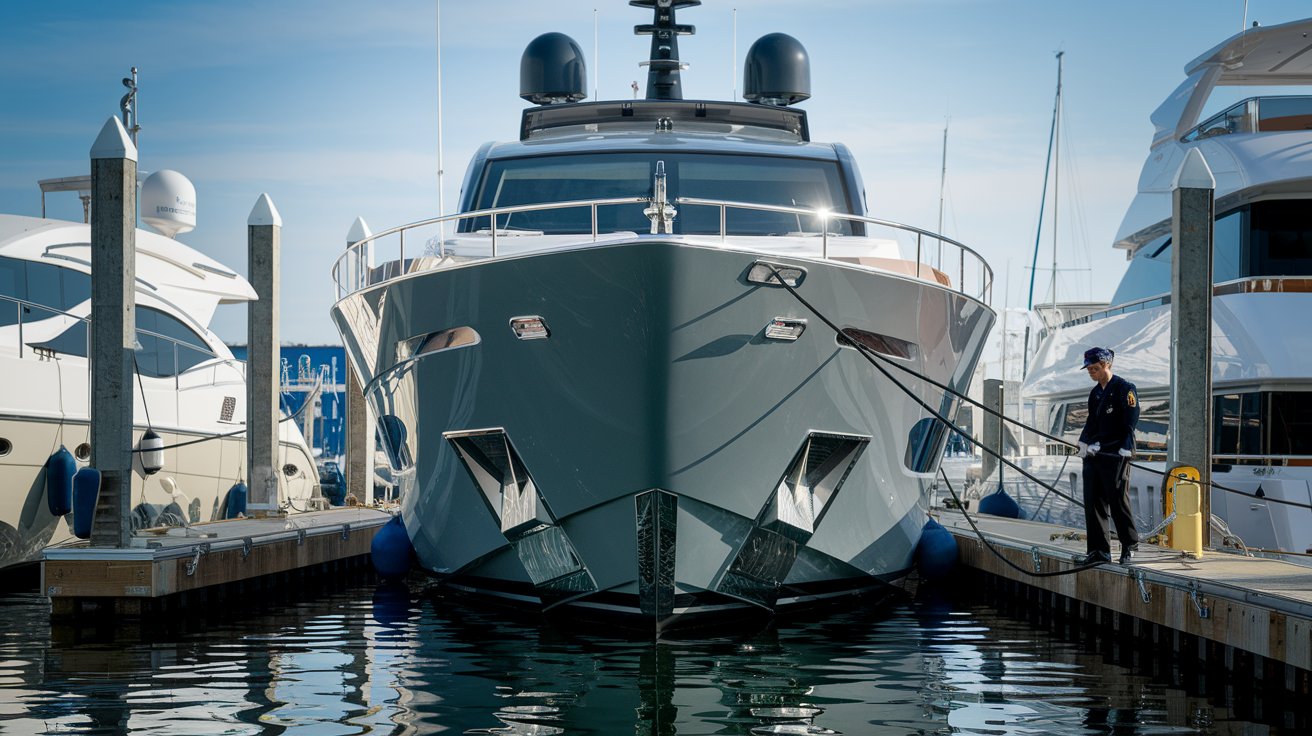
Once alongside the dock, secure the boat immediately with proper line attachment to prevent drift. The initial line should secure the boat’s position while allowing for final adjustments. Spring lines prevent fore and aft movement while bow and stern lines control lateral positioning. Proper line tension ensures the boat remains secure without restricting natural movement from wave action.
How to Dock a Boat in Different Marina Configurations
Marina layouts vary significantly across United States coastal regions, requiring adaptable docking techniques for different configurations. Finger pier marinas, common along the Atlantic and Pacific coasts, demand different approaches than Mediterranean-style mooring systems found in some inland lakes. Understanding these variations ensures successful docking regardless of marina type encountered during your boating adventures.
Slip Docking for Beginners
Learning how to dock a boat in a slip for beginners requires understanding the confined space challenges unique to slip berths. Unlike side-tie docking, slip entry demands precise steering control and momentum management. Approach the slip slowly at a shallow angle, using reverse thrust to stop forward momentum before making contact with the dock. Modern marinas typically provide 30-40 foot slips that accommodate most recreational vessels.
Side-Tie Docking Techniques
Side-tie docking offers more forgiving conditions for beginners learning proper boat docking methods. This configuration allows parallel approach with greater margin for error compared to slip docking. Maintain constant communication with dock personnel who can assist with line handling and provide guidance for optimal positioning. Most experienced boaters prefer side-tie arrangements for overnight stays due to easier departure procedures.
Docking in Challenging Weather Conditions
Environmental conditions dramatically affect boat docking difficulty and safety requirements. Wind speeds exceeding 15 knots create significant challenges for recreational boaters, while current velocities above 1 knot require advanced boat handling techniques. The National Weather Service reports that 2026 weather patterns show increased frequency of sudden wind shifts in coastal areas, making environmental awareness more critical than ever.
How to Dock a Boat With Wind
Understanding how to dock a boat with wind requires recognizing wind’s effect on your vessel’s profile above water. High-sided boats experience greater wind influence than low-profile vessels. Approach from downwind when possible to maintain better control during the final docking phase. Use wind to your advantage by allowing it to push the boat toward the dock rather than fighting against natural forces.
Docking in Strong Current Conditions
Mastering how to dock a boat in a fast or strong current demands understanding water flow dynamics around marina structures. Current typically flows faster in deeper water and slower near shorelines due to bottom friction. Position your approach to use current assistance rather than fighting against it. Professional mariners recommend approaching at a slight upstream angle to compensate for current drift during the docking maneuver.
Single-Handed Boat Docking Strategies
Learning how to dock a boat by yourself represents an advanced skill that requires exceptional preparation and technique refinement. Solo docking eliminates crew assistance, placing full responsibility on the captain for boat control, line handling, and environmental assessment. Modern spring line techniques enable single-handed operators to secure boats efficiently using properly positioned dock lines that can be adjusted from aboard the vessel.
Successful solo docking relies heavily on pre-planned line arrangements and understanding your boat’s pivot points. Many experienced single-handers prefer stern-first docking when operating alone, as this technique provides better visibility and control during the critical final approach phase.
Specialized Docking for Different Boat Types
Boat design significantly influences optimal docking techniques and approach strategies. Pontoon boats require different methods compared to deep-V hull designs due to varying wind resistance and maneuverability characteristics. Understanding your specific vessel type ensures application of appropriate docking techniques for maximum safety and efficiency.
How to Dock a Pontoon Boat
Pontoon boats present unique challenges when learning how to dock a pontoon boat due to their large surface area and shallow draft characteristics. These vessels catch wind easily but respond well to gentle power applications. Approach pontoon docking slowly while accounting for the boat’s tendency to drift sideways in crosswinds. The flat-bottomed design provides excellent stability once properly secured to the dock.
Sport Fishing Boat Docking Considerations
Sport fishing boats typically feature higher profiles and greater weight compared to recreational cruisers, affecting wind sensitivity and momentum management during docking. These vessels often carry substantial gear that shifts the center of gravity, requiring adjusted approach techniques. Account for equipment weight distribution when planning your docking approach, particularly with loaded fishing gear or catch storage.
Overnight Docking and Long-Term Mooring
Understanding how to tie a boat to a dock overnight requires knowledge of proper line selection, knot techniques, and environmental considerations that differ from temporary docking. Overnight mooring must account for tidal changes, weather shifts, and potential wake action from passing vessels. Proper spring line configuration prevents boat movement while allowing for natural tidal rise and fall throughout the night.
Long-term docking arrangements require regular inspection of dock lines and hardware to prevent failure due to chafing or UV degradation. Marine supply stores across the United States report increased sales of synthetic dock lines in 2026, as these materials offer superior longevity compared to traditional natural fiber options.
Professional Dock Line Techniques and Knots
Mastering how to tie a boat to a dock cleat represents fundamental seamanship that every boater must perfect. Proper cleat hitches secure the vessel while allowing for quick release during emergency situations. Professional line handling techniques ensure maximum holding power while minimizing line wear from constant adjustment and movement.
Modern synthetic dock lines require specific knot techniques optimized for low-stretch materials that differ from traditional natural fiber approaches. Understanding proper cleat wrapping prevents line slippage while maintaining easy release capability essential for safe boat operations.
Related video about how to dock a boat properly
This video complements the article information with a practical visual demonstration.
Most asked questions about how to dock a boat properly
How do I remember port vs starboard?
Remember that ‘port’ and ‘left’ both have four letters, making port the left side when facing forward on your boat. Starboard is the right side. You can also remember that port wine is red, and red port navigation lights are on the left side of vessels.
What is the proper docking procedure?
The proper docking procedure involves: 1) Preparing boat and crew before approach, 2) Assessing wind and current conditions, 3) Approaching slowly at 30-45 degree angle, 4) Using short throttle bursts for control, 5) Securing initial spring line, then bow and stern lines for complete mooring.
Which line should you cast off first when departing?
When departing a dock, cast off spring lines first, followed by the line furthest from your intended direction of departure. If leaving bow-first, release stern lines last. If backing out, release bow lines last to maintain boat control during departure.
What is the best way to dock a boat with no wind or current?
In calm conditions with no wind or current, approach the dock at minimal speed maintaining steerage way, typically 1-2 knots. Use gentle throttle inputs for precise control and approach parallel to the dock at a shallow angle for easiest boat positioning.
How fast should I approach when docking?
Approach speed should be the minimum required to maintain steering control, typically 1-2 knots in calm conditions. In challenging conditions with wind or current, slight speed increases may be necessary but never exceed 3-4 knots during marina approaches for safety.
What equipment do I need for proper boat docking?
Essential docking equipment includes: four dock lines (two spring lines, bow and stern lines), proper fenders for hull protection, dock hooks for line handling, and communication devices for crew coordination. Modern boats benefit from bow thrusters for enhanced maneuverability.
| Docking Aspect | Key Technique | Safety Benefit |
|---|---|---|
| Approach Speed | Minimum steerage way (1-2 knots) | Prevents collision damage |
| Line Sequence | Spring line first, then bow/stern | Controls boat position |
| Wind Assessment | Observe flags, water surface | Prevents wind-related accidents |
| Crew Communication | Clear role assignments | Eliminates confusion |
| Equipment Check | Fenders and lines ready | Protects vessel hull |