Choosing between a bowrider and pontoon boat depends on your specific boating needs, budget, and water activities. Both boat types offer unique advantages, with pontoon boats excelling in stability and social gatherings, while bowriders provide superior performance and watersport capabilities. Understanding these fundamental differences helps you make an informed decision that matches your lifestyle and boating preferences.
What Is the Difference Between a Pontoon and a Bowrider
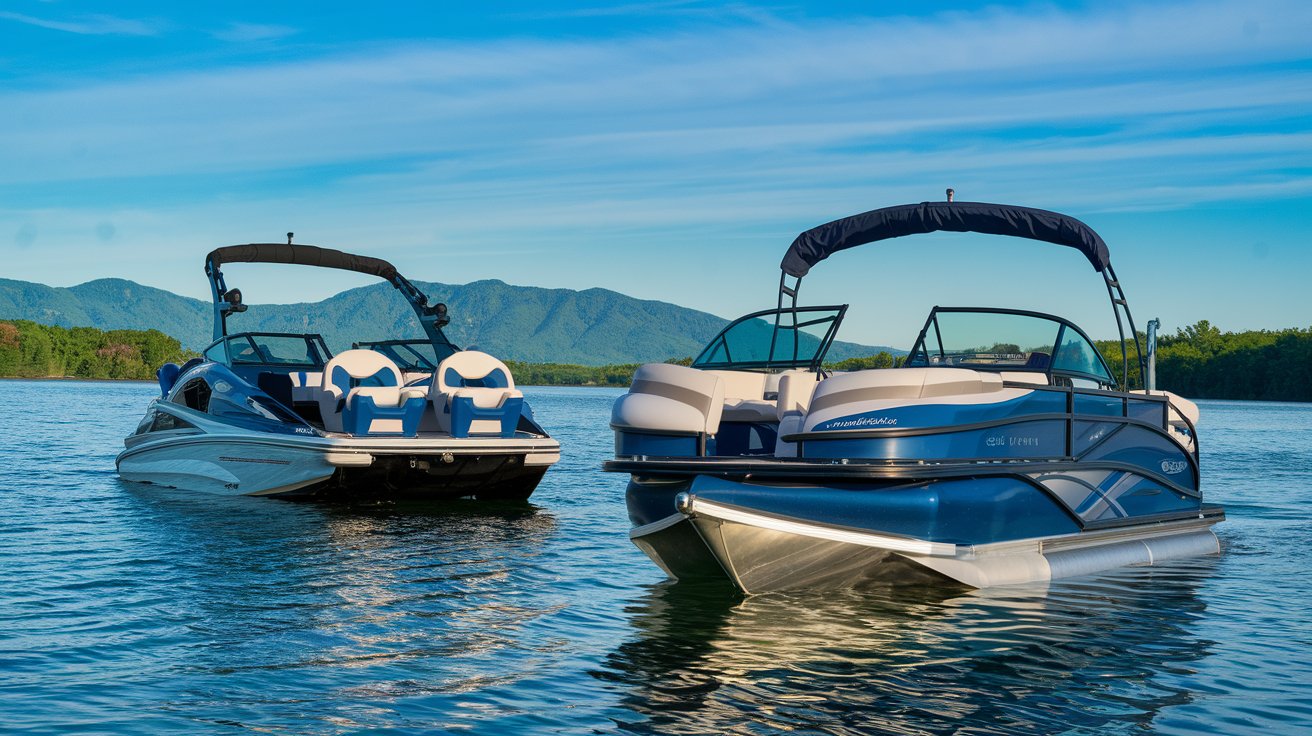
A pontoon boat features two or three aluminum tubes (pontoons) that provide buoyancy and stability on the water. These boats typically offer spacious deck areas with comfortable seating arrangements, making them ideal for leisurely cruising and entertaining large groups. The flat deck design maximizes usable space and creates an excellent platform for social activities.
In contrast, a bowrider boat has a traditional V-hull design with an open bow area featuring additional seating. These boats are engineered for speed and performance, offering superior handling in various water conditions. The streamlined hull shape cuts through waves more efficiently, making bowriders the preferred choice for watersports enthusiasts and those who prioritize performance over space.
Hull Design and Construction Differences
Pontoon boats utilize multi-hull construction with aluminum pontoons that create exceptional stability but limit speed capabilities. The typical pontoon boat reaches maximum speeds of 25-35 mph, depending on engine size and tube configuration. Modern tritoons (three-tube designs) offer improved performance while maintaining the stability advantage.
Performance and Handling Characteristics
Bowrider boats feature deep-V hulls that slice through water efficiently, enabling speeds of 45-70 mph with appropriate engines. The hull design provides better handling in rough water conditions and choppy seas. However, this performance comes at the cost of interior space and fuel efficiency compared to pontoon boats.
Cost Comparison: Pontoon vs Bowrider Pricing in 2026
In 2026, new pontoon boats typically range from $35,000 to $150,000, depending on size, features, and engine configuration. Entry-level pontoons with basic amenities start around $35,000, while luxury models with premium features can exceed $200,000. The average pontoon boat price in the United States currently sits at approximately $65,000.
Bowrider boats generally command higher prices, with new models ranging from $45,000 to $180,000 for comparable sizes. The performance-oriented design and complex hull construction contribute to increased manufacturing costs. Additionally, bowriders often require more expensive maintenance due to their high-performance engines and sophisticated systems.
Pontoon Boat vs Bowrider for Social Gatherings
Pontoon boats excel in social situations due to their spacious, flat deck design that accommodates larger groups comfortably. Most pontoons can seat 10-15 people safely, with some larger models accommodating up to 20 passengers. The open layout facilitates conversation and movement throughout the boat, making them ideal for family gatherings and entertaining.
Bowriders typically seat 6-10 people but offer a more intimate setting with defined seating areas. While they provide less overall space, the bow seating area creates a unique social zone that many boaters enjoy. The trade-off between space and performance makes bowriders suitable for smaller groups who value speed and agility over maximum capacity.
Seating Configurations and Comfort
Modern pontoon boats feature flexible seating arrangements including L-shaped lounges, captain’s chairs, and convertible dining areas. Many models include amenities like built-in coolers, cup holders, and storage compartments integrated into the furniture. The stable platform allows passengers to move freely without concerns about boat stability.
Entertainment Features and Amenities
High-end pontoons often include entertainment systems, wet bars, grills, and even slide attachments. The spacious deck accommodates these features without compromising passenger space. Bowriders focus more on performance-oriented amenities like wakeboard towers, ballast systems, and premium sound systems designed for active water recreation.
Rough Water Performance and Handling
Bowrider boats significantly outperform pontoons in rough water conditions due to their V-hull design that cuts through waves effectively. The deep-V configuration allows these boats to maintain speed and stability in choppy conditions that would be uncomfortable or unsafe for pontoon boats. Most bowriders can handle 3-4 foot waves with relative ease.
Pontoon boats struggle in rough water conditions due to their flat-bottom design and high center of gravity. Waves can cause uncomfortable bouncing and make navigation challenging. However, modern tritoon designs with performance packages offer improved rough water capabilities while maintaining the stability advantage in calm conditions.
Watersports Capabilities and Performance
For watersports enthusiasts, bowriders clearly dominate with superior acceleration, higher top speeds, and better wake characteristics for skiing and tubing. The powerful engines and performance hull design create ideal conditions for wakeboarding, water skiing, and other towed sports. Most bowriders can generate sufficient speed for all popular watersports activities.
Pontoon boats have improved significantly in watersports capabilities, especially tritoon models with high-performance engines. While they can adequately pull skiers and tubers, the acceleration and wake quality don’t match bowrider performance. However, pontoons excel at other water activities like swimming, fishing, and leisurely cruising.
Engine Requirements for Watersports
Successful watersports require minimum horsepower ratings of 200-300 HP for bowriders, depending on boat size and desired performance level. Pontoons need 250-400 HP to achieve comparable watersports performance, though the wake quality remains inferior to purpose-built bowriders.
Towing Capacity and Wake Quality
Bowrider wake characteristics provide clean, consistent pulls for skiers and wakeboarders. The hull design creates predictable wake patterns that enhance the watersports experience. Pontoons generate larger, less predictable wakes that can be challenging for novice watersports participants but acceptable for experienced users.
Engine Options and Performance Specifications
Both pontoon and bowrider boats utilize outboard, sterndrive, or inboard engines, but with different performance priorities. Pontoons typically use single or twin outboard motors ranging from 150-400 HP, with larger models accommodating triple engine configurations. The focus remains on fuel efficiency and reliability rather than maximum performance.
Bowrider engines prioritize power and acceleration, commonly featuring 250-500 HP configurations. High-performance models may include supercharged or turbocharged engines for maximum speed. The engine-to-weight ratio in bowriders typically exceeds pontoon boats, resulting in superior acceleration and top-end speed capabilities.
Storage and Amenities Comparison
Pontoon boats offer superior storage capacity due to their spacious deck design and multiple compartments integrated throughout the boat. Storage options include under-seat compartments, stern storage areas, and specialized equipment lockers. The flat deck design allows for easy access to all storage areas without compromising stability.
Bowrider storage focuses on functionality within the constraints of the performance hull design. While total storage volume may be less than pontoons, bowriders often feature more sophisticated storage solutions including watertight compartments, ski lockers, and integrated cooler systems designed to complement active water recreation.
Interior Space and Layout Options
Modern pontoon boats maximize usable deck space with layouts ranging from fishing-focused configurations to luxury entertainment platforms. The modular furniture design allows customization for specific activities and passenger needs. Interior heights and walkways accommodate comfortable movement for all passengers.
Specialized Equipment Storage
Bowriders excel at watersports equipment storage with dedicated compartments for skis, wakeboards, and safety equipment. Integrated storage solutions include board racks, rope lockers, and gear organizers designed for active use. Pontoons focus on general storage with options for fishing equipment, recreational gear, and personal belongings.
Which Boat Type Should You Choose in 2026
Choose a pontoon boat if you prioritize comfort, entertaining large groups, stability, and value. Pontoons excel for families with children, older adults who appreciate easy boarding, and those who enjoy relaxed social boating experiences. The spacious design accommodates various activities from fishing to swimming to casual cruising.
Select a bowrider boat if performance, watersports, and speed are priorities. Bowriders suit active families who enjoy skiing, wakeboarding, and exploring larger bodies of water. The superior rough water capabilities make bowriders ideal for coastal boating and larger lakes where conditions can change rapidly.
Related video about difference between bowrider and pontoon boats
This video complements the article information with a practical visual demonstration.
Essential Q&A about difference between bowrider and pontoon boats
What are the main disadvantages of pontoon boats?
The primary disadvantages of pontoon boats include limited performance in rough water, slower top speeds compared to other boat types, higher wind resistance due to the large deck area, and potential for poor handling in strong currents. Additionally, pontoons can be challenging to trailer due to their width and may have limited access to shallow water areas.
What makes a boat classified as a bowrider?
A bowrider is classified by its open bow design featuring additional seating forward of the helm, typically accessed by walking through the windshield area. The boat must have a traditional hull design with an open cockpit layout and bow seating that accommodates passengers safely while underway.
Are pontoon boats more affordable than bowriders?
Generally, entry-level pontoon boats are more affordable than comparable bowriders, with basic models starting around $35,000 versus $45,000 for bowriders. However, luxury pontoons can exceed bowrider prices when equipped with premium amenities. Operating costs tend to favor pontoons due to better fuel efficiency and lower maintenance requirements.
Which boat type is better for beginner boaters?
Pontoon boats are typically better for beginner boaters due to their exceptional stability, forgiving handling characteristics, and spacious layout that reduces anxiety for new boaters. The stable platform makes docking easier, and the slower speeds provide more time to react to situations. However, bowriders offer better learning opportunities for advanced boat handling skills.
Can pontoon boats handle saltwater environments?
Yes, pontoon boats can operate in saltwater, but they require more maintenance than in freshwater environments. The aluminum pontoons and hardware need regular freshwater flushing and anti-corrosion treatments. Many manufacturers offer saltwater packages with upgraded materials and protective coatings for marine environments.
What is the typical lifespan of pontoon vs bowrider boats?
With proper maintenance, pontoon boats typically last 15-20 years due to their simple aluminum construction and lower stress operating environment. Bowriders generally have lifespans of 12-18 years, with the more complex hull design and high-performance engines requiring more intensive maintenance to achieve maximum longevity.
| Key Aspect | Pontoon Boats | Bowrider Boats |
|---|---|---|
| Best Use | Social gatherings, relaxed cruising | Watersports, performance boating |
| Capacity | 10-20 people | 6-10 people |
| Price Range | $35,000-$150,000 | $45,000-$180,000 |
| Top Speed | 25-35 mph | 45-70 mph |
| Rough Water | Limited capability | Excellent performance |