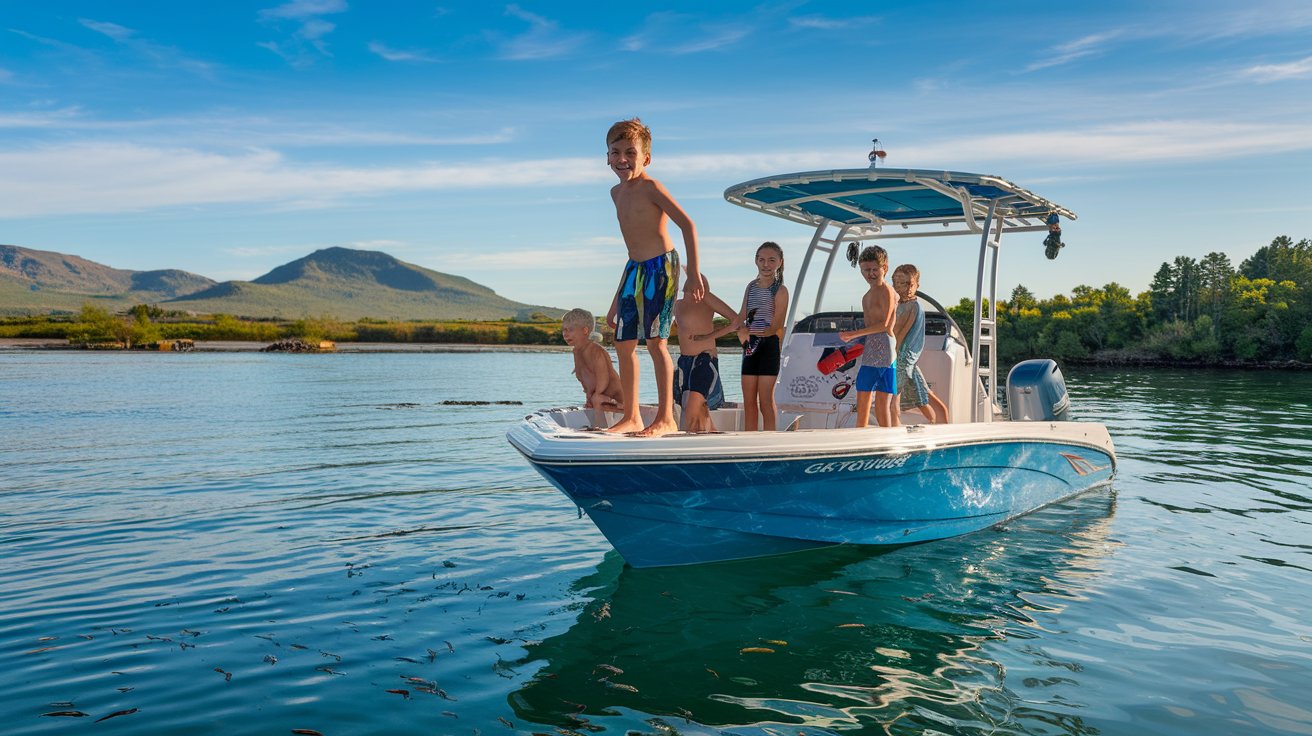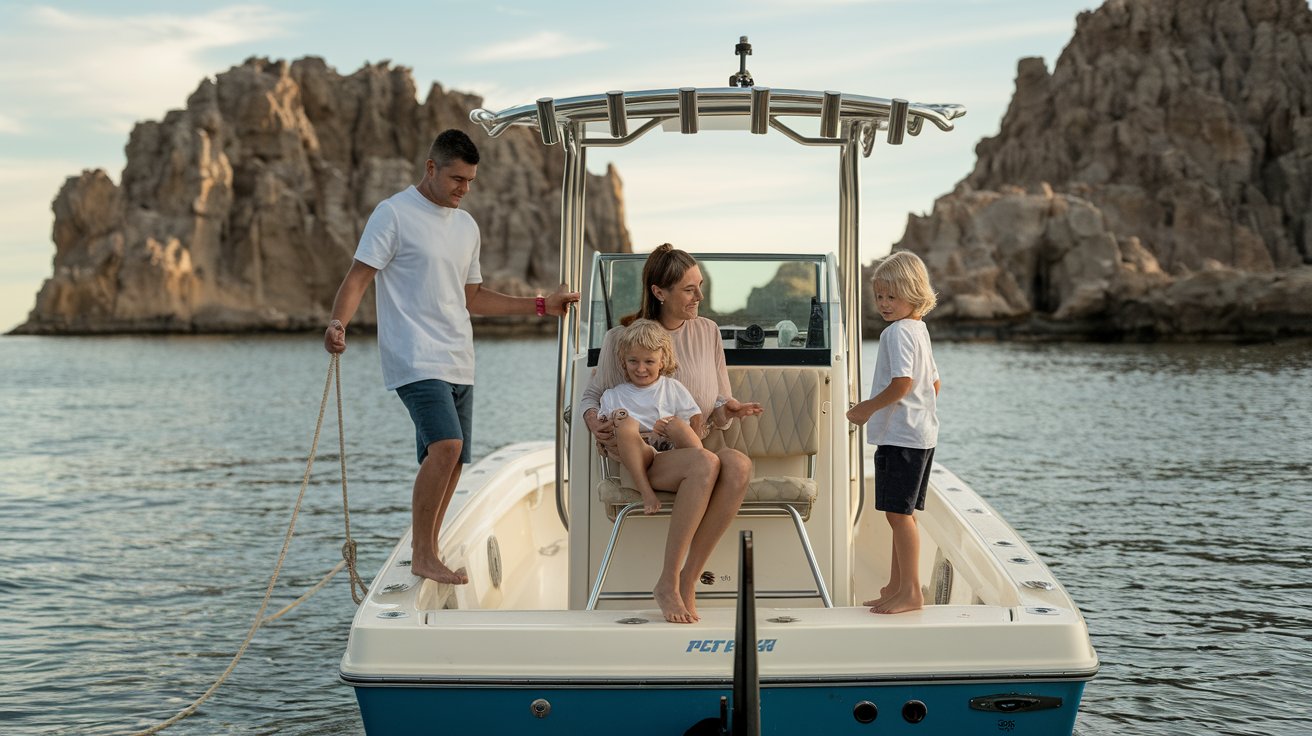
Boating accidents involving children under 13 years old account for approximately 12% of all recreational boating fatalities in the United States. Keeping kids safe on a boat requires proper preparation, age-appropriate safety equipment, and understanding critical water safety principles that can prevent tragedy and ensure memorable family adventures on the water.
Essential Life Jacket Safety for Children
The United States Coast Guard reports that 85% of drowning victims in boating accidents were not wearing life jackets. Proper life jacket fitting is the most critical factor in keeping children safe on boats, as incorrectly fitted jackets can slip off or fail to keep a child’s head above water during emergencies.
Children’s life jackets must be Coast Guard approved and specifically designed for their weight range, not their age. A properly fitted jacket should be snug but comfortable, with the child unable to slip their arms out when the jacket is zipped and buckled. Life jacket safety requires checking that the jacket doesn’t ride up over the child’s chin or ears when lifted by the shoulders.
Choosing the Right Life Jacket Size
Life jacket sizing depends on weight, not age, with specific categories including infant (under 30 pounds), child (30-50 pounds), and youth (50-90 pounds). Proper life jacket fit means the jacket cannot be pulled off over the child’s head and keeps their mouth and nose well above water. Parents should test the fit in shallow water before heading to deeper areas.
When Children Must Wear Life Jackets
Most states require children under 13 to wear life jackets at all times while on moving boats, with some states extending this requirement to age 16. Boating safety regulations vary by state, but the safest approach is requiring life jackets whenever children are on deck or the boat is in motion, regardless of their swimming ability.
Teaching Water Safety and Swimming Skills
Even strong swimmers can struggle in open water conditions that differ significantly from pool environments. Open water swimming safety involves understanding currents, waves, and temperature changes that can quickly overwhelm children, making it essential to teach specific skills for boating environments.
The American Red Cross recommends children demonstrate floating skills, treading water for at least one minute, and swimming 25 yards continuously before being considered competent swimmers. Water rescue skills should include teaching children how to call for help, reach for floating objects, and stay calm if they fall overboard.
Critical Safety Equipment for Family Boating
Beyond life jackets, comprehensive boating safety equipment for families includes communication devices, first aid supplies, sun protection, and emergency signaling tools. The Coast Guard requires specific safety equipment based on boat size and type, but families with children should exceed minimum requirements.
Emergency communication devices have evolved significantly by 2026, with satellite communicators and enhanced VHF radios providing reliable contact with rescue services even in remote areas. Family boating safety also requires appropriate clothing, emergency food and water, and tools for basic boat maintenance that could prevent dangerous situations.
Sun Protection Essentials for Kids
Water reflection intensifies UV exposure by up to 15%, making sun protection critical for children on boats. Essential items include SPF 50+ sunscreen applied 30 minutes before sun exposure, wide-brimmed hats, UV-protective clothing, and polarized sunglasses designed for children. Reapplication every two hours is mandatory, even on cloudy days.
Emergency Communication and Signaling
Modern boats should carry VHF radios, emergency position indicating radio beacons (EPIRBs), and satellite communication devices for areas beyond cellular coverage. Emergency communication equipment must be easily accessible and all adults aboard should know proper radio procedures for distress calls. Teaching older children basic radio operation can be lifesaving.
Safe Boating with Infants and Toddlers (0-3 Years)
Infants under six months should generally avoid boat trips due to their inability to regulate body temperature and extreme vulnerability to sun exposure. Boating with toddlers requires specialized equipment, constant supervision, and understanding that traditional car seats cannot be used on boats due to different safety requirements.
The American Academy of Pediatrics recommends waiting until infants can hold their heads up independently before boat trips, typically around 4-6 months. Safe boating with infants requires specialized infant life jackets, portable shade structures, and emergency plans specific to very young children who cannot follow safety instructions.
Infant Life Jacket Requirements
Infant life jackets must include head support features and crotch straps to prevent slipping. Infant boating safety requires jackets specifically rated for weights under 30 pounds, with many models including features like head pillows and bright colors for visibility. Regular fit checks are essential as infants grow quickly.
Creating Safe Spaces for Young Children
Designated safe areas on boats should include non-slip surfaces, padded edges, and barriers preventing access to dangerous areas like engines or railings. Child-proofing boats involves securing loose items, installing safety netting, and creating shaded areas where young children can rest safely away from sun and spray.
Understanding the Leading Causes of Boating Deaths
Drowning accounts for approximately 79% of all recreational boating fatalities, with the majority involving people not wearing life jackets. Leading causes of boating deaths also include collisions, fires, and carbon monoxide poisoning, making comprehensive safety education essential for families with children.
Alcohol involvement occurs in roughly 23% of recreational boating deaths, emphasizing the importance of designated boat operators who remain completely sober. Boating accident prevention requires understanding that operator inattention and inexperience contribute significantly to accidents involving families with children.
Essential Safety Rules: The 3-3-3 and 777 Rules
The 3-3-3 rule for water safety states that the average person can survive 3 minutes without air, 3 days without water, and 3 weeks without food, emphasizing the critical nature of immediate rescue in water emergencies. Water safety rules for kids help children understand emergency priorities and the importance of staying calm during rescue situations.
The 777 rule specifically applies to child supervision, requiring adult oversight within 7 feet of children under 7 years old for 7 seconds maximum attention gaps. Child supervision rules on boats are even more stringent, with experts recommending constant visual contact with children under 10 and designated child watchers during all boating activities.
Weather Awareness and Emergency Preparedness
Weather conditions can change rapidly on water, with sudden storms creating dangerous situations for families with children. Boating weather safety requires monitoring marine forecasts, understanding storm warning signals, and having predetermined plans for seeking shelter or returning to shore when conditions deteriorate.
Emergency preparedness includes teaching children what to do during various scenarios, from person overboard situations to engine failures. Emergency preparedness for families involves practicing safety drills, ensuring all family members know the location of safety equipment, and establishing clear communication protocols during emergencies.
Boat Safety Education and Certification
Boat safety education has become increasingly important, with many states now requiring safety certification for boat operators. Boating safety courses cover navigation rules, emergency procedures, and equipment requirements that directly impact family safety on the water.
Children should participate in age-appropriate safety education, including courses offered by the Coast Guard Auxiliary and Power Squadrons. Family boating education ensures everyone understands their role in maintaining safety and can respond appropriately during emergencies, creating a culture of safety awareness that protects the entire family.
Related video about how to keep kids safe on a boat
This video complements the article information with a practical visual demonstration.
Everything you need to know about how to keep kids safe on a boat
What is the 3-3-3 rule for kids on boats?
The 3-3-3 rule states that people can survive approximately 3 minutes without air, 3 days without water, and 3 weeks without food. For boating safety, this emphasizes the critical importance of immediate rescue if a child falls overboard, as hypothermia and drowning can occur within minutes in water emergencies.
What is the leading cause of death in boating accidents?
Drowning is the leading cause of death in recreational boating accidents, accounting for approximately 79% of all fatalities. Most drowning victims were not wearing life jackets, making proper life jacket use the single most important safety measure for keeping children safe on boats.
How do you keep a toddler safe on a boat?
Keep toddlers safe on boats by ensuring proper life jacket fit, maintaining constant supervision within arm’s reach, creating designated safe play areas with non-slip surfaces, providing adequate sun protection, and child-proofing dangerous areas like railings and engines. Never leave toddlers unattended on boats.
What is the 777 rule for kids?
The 777 rule requires adults to supervise children under 7 years old within 7 feet distance with no more than 7 seconds of attention gaps. On boats, this supervision should be even closer due to water hazards, with experts recommending constant visual contact and designated child watchers.
At what age can children stop wearing life jackets on boats?
Most states require children under 13 to wear life jackets while on moving boats, though some extend this to age 16. Regardless of state laws, children should wear life jackets until they demonstrate strong swimming skills in open water conditions and can tread water for extended periods.
What safety equipment is essential for boats with children?
Essential safety equipment includes properly fitted Coast Guard approved life jackets for each child, VHF radio, first aid kit, emergency flares, fire extinguisher, sun protection items, emergency communication devices, and child-specific items like specialized infant life jackets and safety netting for deck areas.
| Safety Priority | Key Requirements | Critical Benefits |
|---|---|---|
| Life Jacket Compliance | Coast Guard approved, proper fit, worn at all times | Prevents 85% of drowning fatalities |
| Constant Supervision | 777 rule implementation, designated watchers | Immediate response to emergencies |
| Swimming Skills | Open water training, 25-yard swimming ability | Increased survival chances if overboard |
| Emergency Equipment | Communication devices, first aid, signaling tools | Quick rescue coordination and medical response |
| Weather Awareness | Marine forecast monitoring, emergency plans | Avoids dangerous weather conditions |